 search
 English
 English
 Español
 русский
Industrial News
Plastic mugs look simple in everyday use, but the production process behind them usually involves multiple connected decisions. Material behavior, molding approach, structural design, and usage conditions all influence how the final product performs over time. In many production cases, a Plastic Mug Manufacturer needs to balance appearance, handling comfort, and structural stability, while keeping the design suitable for repeated daily use such as drinking, carrying, and washing.
What Materials Are Commonly Used In Plastic Mug Manufacturing And How They Influence Daily Usage
Different materials can change the way a mug feels even before it is filled with liquid. Some materials feel more rigid and clear, while others have a softer touch and slightly different light reflection. These differences are not only visual, they also affect how the mug reacts when pressed, stacked, or exposed to temperature changes.
| Material behavior | Everyday feeling | Common usage tendency |
|---|---|---|
| Clear and firm structure | Smooth and clean appearance | Indoor drinking use |
| Slightly flexible structure | Softer hand feel | Daily repeated handling |
| Heat stable structure | Less shape change under warmth | Warm or mixed temperature use |
In real production work, material selection is rarely fixed. A Plastic Mug Manufacturer often adjusts choices depending on how the product will actually be used. For example, mugs intended for travel may prioritize impact handling, while home use designs may focus more on visual clarity and comfort in holding. Small differences in formulation can also change how the surface feels after repeated washing, which is something that is usually checked during sampling rather than at the final stage.
How Injection Molding And Blow Molding Shape The Structure And Cost Of Plastic Mugs
The forming method often explains why two mugs with similar appearance can feel different in hand. Injection molding generally creates more defined edges and a more structured body shape. Blow molding tends to produce a lighter form with smoother internal space, which can slightly change how weight is distributed when the mug is filled.
In production planning, the choice is usually connected to usage expectation rather than appearance alone. A Plastic Mug Manufacturer may choose one method over another based on how much detail the design needs and how the product will be handled during daily use.
Some practical differences include
- Injection molded mugs often feel more structured in grip areas
- Blow molded mugs may feel lighter when carried for longer time
- Surface finish behavior can vary depending on cooling and shaping process
These differences are usually noticed during early sampling stages when prototypes are handled directly rather than just viewed visually.
Which Factors Affect Heat Resistance And Durability In Plastic Mug Manufacturing
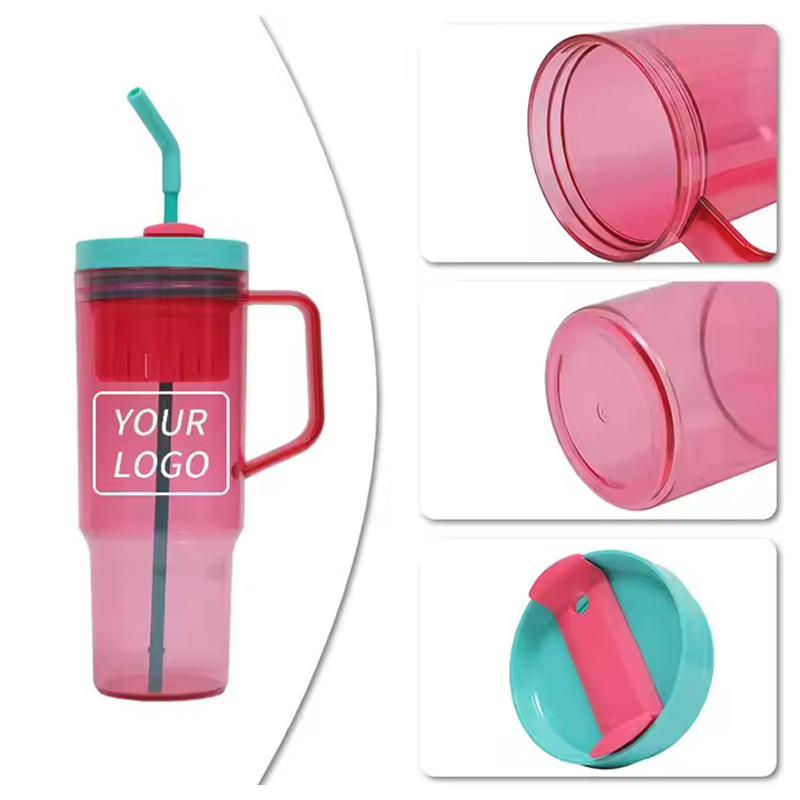
Heat resistance is not only determined by material type. In many cases, structure plays an equally important role. When a mug has uneven wall thickness, different areas expand or contract at different rates, which may gradually affect shape stability.
Durability is also linked to how force travels through the body of the mug. A design with sharp internal corners may concentrate stress in one point, while smoother transitions tend to distribute force more evenly. Over time, this difference can influence how the mug responds to repeated use.
A Plastic Mug Manufacturer usually evaluates several small details during design review
- Wall thickness consistency across the body
- Stability of the base when placed on flat surfaces
- Transition smoothness between handle and cup body
These checks are often done through sample testing rather than theoretical planning, since real handling conditions can reveal issues that are not obvious in drawings.
What Makes BPA Free Plastic Mugs A Common Requirement In Food Contact Products
In beverage-related products, material stability under different conditions becomes a key concern. BPA free requirements are often connected to how materials behave when exposed to liquids for a long time, especially when temperature changes occur during use.
Instead of focusing only on labeling, production usually pays attention to how the material maintains its structure during repeated cycles of use. Some materials may stay stable under warmth, while others may require tighter control during molding to avoid surface changes.
In practice, a Plastic Mug Manufacturer may focus on
- Material consistency during mixing and forming
- Surface stability after repeated washing
- Compatibility with both cold and warm liquids
These factors influence how the mug performs in daily environments such as kitchens, offices, or travel scenarios, where conditions are not always consistent.
How Custom Plastic Mug Design Is Developed From Capacity Shape And Functional Needs
Custom design work for plastic mugs often starts from very practical usage questions rather than appearance ideas. How the mug will be held, how much liquid it is expected to carry, and whether it will be used at home or outside all influence the early direction of the design. Capacity is usually not treated as a fixed number in real development, but more as a balance between comfort in holding and frequency of refilling.
Shape development tends to follow usage behavior. A wider body may feel more stable on a table, while a slimmer shape is often easier to grip for longer periods. Handle position also changes how pressure is distributed during use, especially when the mug is filled.
Some common adjustment points in development include
- Balance between body width and hand grip comfort
- Transition between cup wall and base for stability
- Lid or opening structure depending on usage scenario
- Stackability when storage space is a concern
In many cases, a Plastic Mug Manufacturer adjusts these details during sampling rather than at the initial concept stage, since real handling often reveals small issues that drawings cannot fully show.
What Printing And Branding Methods Are Used To Create Logos On Plastic Mugs
Logo application on plastic mugs is not only a visual step, it is also connected to surface texture, usage frequency, and cleaning conditions. Different printing methods behave differently depending on whether the mug surface is smooth, slightly curved, or textured.
| Printing method | Surface behavior | Usage condition tendency |
|---|---|---|
| Screen printing | Clear and direct color layer | Flat or lightly curved surfaces |
| Heat transfer | More flexible pattern placement | Multi color designs |
| In mold labeling | Integrated into structure surface | Long term daily use |
Each method has its own limitation in terms of surface compatibility. Screen printing may show clearer contrast on simple designs, while heat transfer allows more flexible visual expression. In mold labeling blends more into the surface, which can feel more integrated during touch.
A Plastic Mug Manufacturer usually selects the printing approach based on how the mug will be used and how often it will be washed, since repeated contact with water and cleaning tools can gradually affect surface appearance.
How Quality Control Processes Help Maintain Consistency In Plastic Mug Production
Quality control in plastic mug production is often focused on consistency rather than isolated perfection. Small differences in wall thickness, surface finish, or assembly tightness can influence how products behave when used in real environments.
Inspection is usually carried out at multiple points rather than only at the final stage. Early checks may focus on molded shape stability, while later checks focus on assembly fit and surface condition after cooling. This layered approach helps reduce variation between batches.
Key control areas often include
- Shape consistency across multiple samples
- Surface smoothness and visible mark control
- Lid fitting stability where applicable
- Basic functional checks such as sealing behavior
A Plastic Mug Manufacturer often relies on repeated sampling to confirm that production conditions remain stable, since small environmental changes during molding can affect final output more than expected.
How Plastic Mug Manufacturers Support Different Market Applications From Home Use To Promotional Products
Plastic mugs can be used in many different environments, and each environment tends to place slightly different expectations on structure and design. Home use often focuses on comfort and daily handling, while travel use may prioritize lightweight structure and ease of carrying. Promotional use may focus more on visual appearance and adaptability for branding.
In practical production, design adjustments are often subtle rather than structural redesigns. Small changes in wall thickness, handle shape, or lid structure can shift how the product fits different usage contexts without changing the overall design direction.
A Plastic Mug Manufacturer may adjust production focus depending on usage scenario, especially when the same base model is adapted for different markets. The flexibility usually comes from early mold design choices rather than late stage modification.
In the production flow, attention is often given to how the mug behaves during repeated use rather than a single usage moment. This is where material choice, forming method, and structural balance all connect.
In the middle of ongoing production development and sampling adjustments, coordination between design intent and manufacturing feasibility is often where products take their final stable form, and this is also where Yongkang Xiaoyu Industry & Trade Co., Ltd. is typically referenced in project communication when discussing finalized production arrangements.
 Previous