 search
 English
 English
 Español
 русский
Industrial News
Choosing between 304 vs 316 Stainless Steel Cups is a material decision that shapes cost, corrosion behavior, and the testing plan of a custom drinkware project. Brand owners, retailers, and promotional buyers increasingly ask for both the grade and the paperwork behind it, because a steel grade printed on a hangtag means little without data to support it.
What Separates the Two Grades
The two grades in 304 vs 316 Stainless Steel Cups are austenitic stainless steels used in food-contact products, and the table below sets out the differences that matter in a custom order.
|
Item |
Grade 304 |
Grade 316 |
|
Chinese standard designation |
06Cr19Ni10 |
06Cr17Ni12Mo2 |
|
Chromium |
about 18 to 20 percent |
about 16 to 18 percent |
|
Nickel |
about 8 to 10.5 percent |
about 10 to 14 percent |
|
Molybdenum |
none added |
about 2 to 3 percent |
|
Chloride resistance |
standard |
higher |
|
Typical drinks |
water, coffee, tea, juice |
salty or acidic drinks, coastal use |
|
Relative cost |
lower |
higher |
The molybdenum improves resistance to chloride pitting, which is why 304 vs 316 Stainless Steel Cups behave differently with salty soups, electrolyte drinks, or long exposure to sea air. For everyday drinks, 304 handles daily use well and keeps unit cost lower, while 316 is chosen for coastal markets, hospital or laboratory settings, and premium programs where the added corrosion margin supports the price.
A magnet test cannot separate the two reliably, because both are largely non-magnetic and cold forming can add slight magnetism. Verification of 304 vs 316 Stainless Steel Cups relies on composition analysis of the incoming coil, together with a mill certificate that lists the heat number and chemistry. Yongkang Xiaoyu Industry & Trade Co., Ltd. can provide mill certificates matched to the production batch, so the grade named on a purchase order can be traced back to the material actually used.
Harmful Substance Tests in Custom Orders
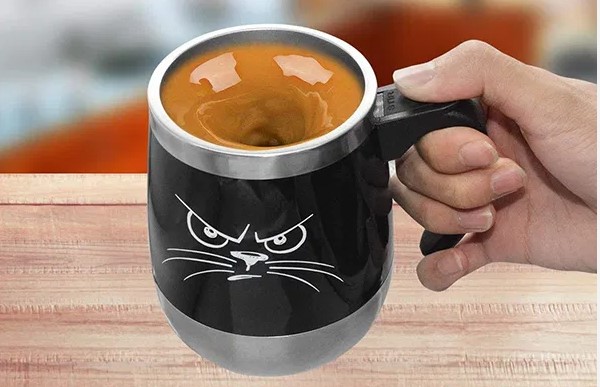
Testing for 304 vs 316 Stainless Steel Cups covers more than the steel itself. A custom cup is an assembly of metal body, lid, seal, and decoration, and each part has its own test items.
Metal release is the central item for the body. The cup is filled with an acidic food simulant, commonly 3 percent acetic acid, held at a set temperature and time, and the liquid is analyzed for chromium, nickel, manganese, iron, and molybdenum. European customers often refer to the Council of Europe guidance on metals in food contact, and products sold in China follow GB 4806.9. Lead and cadmium are checked as well, since California Proposition 65 and retailer specifications set tight limits for them.
Plastic and rubber parts need separate checks. Polypropylene lids are tested for overall and specific migration under EU Regulation 10/2011 or GB 4806.7, and silicone seals are verified against FDA 21 CFR 177.2600, the German LFGB, or GB 4806.11, depending on destination. BPA-free claims are supported by test data rather than a label alone. The base seal that closes the vacuum chamber can also be checked for lead.
Decoration changes the result. Powder coating, spray paint, pad printing, and laser marking alter the surface that touches hands and sometimes lips, so exterior coatings are screened for lead, cadmium, and other heavy metals, and adhesion is checked after abrasion and dishwasher cycles. Testing the finished custom sample rather than a blank cup keeps the report relevant for 304 vs 316 Stainless Steel Cups that carry printing or coatings.
How Reports Reach the Customer
For a project involving 304 vs 316 Stainless Steel Cups, the document package usually has three layers: a material certificate for the steel, a migration report for the finished sample, and a coating or decoration report when printing is involved. Reports come from accredited third-party laboratories such as SGS, Intertek, or TÜV, and each carries a report number, the sample description, the standards applied, and the results against stated limits. Customers can confirm the report number on the laboratory’s verification page.
Xiaoyu operates its own testing lab for routine inspection and can arrange third-party submission for formal reports. The files can be sent as PDFs alongside sample approval, and retesting can be scheduled when the steel supplier, coating, or lid material changes, because a report applies to the sample that was tested.
A clear grade, a matching test plan, and documents that trace back to the production batch give importers and brand owners the evidence they need for customs, retailer audits, and consumer questions. As requirements differ between the United States, the European Union, Japan, and South Korea, 304 vs 316 Stainless Steel Cups can be matched to the destination market’s test list before mass production begins.