 search
 English
 English
 Español
 русский
Industrial News
We all know the small frustration: a hot coffee that’s lukewarm by the time you get to the office, or an iced drink that warms up too fast on the road. Designers and people who use travel drinkware have been paying closer attention to how these cups behave inside cars — not just because of what materials they use, but because of the basic ways heat moves and how users treat their cups while driving. A Car Mug that feels reliable on the morning commute usually gets that way through careful design choices and a few sensible habits.
Why heat matters on the road
There are three simple ways heat moves, and each one matters inside a cup.
- Conduction: heat traveling through solid bits. If the inner surface is in direct contact with a metal outer shell, heat runs through quickly. Interrupting that path — with insulating layers, air gaps, or lower-conductivity materials — slows the transfer.
- Convection: heat carried by moving air or liquid. Open lids, a gust from a vent, or windows down all speed this up. Tight lids and smaller internal air spaces keep convective losses down.
- Radiation: invisible waves that carry energy away. Reflective inner surfaces bounce some of that energy back to the drink rather than letting it fly off.
Inside a car, conditions change fast: sunlight through a windshield, the heater blasting, or a cold cupholder. A design that keeps the three heat pathways in check will tend to keep a beverage at a pleasant temperature longer than a cup that ignores them.
How different materials play together
Most practical travel mugs mix a few materials so each one does what it does well. That blend affects how the cup feels, how long it holds temperature, and how easy it is to live with.
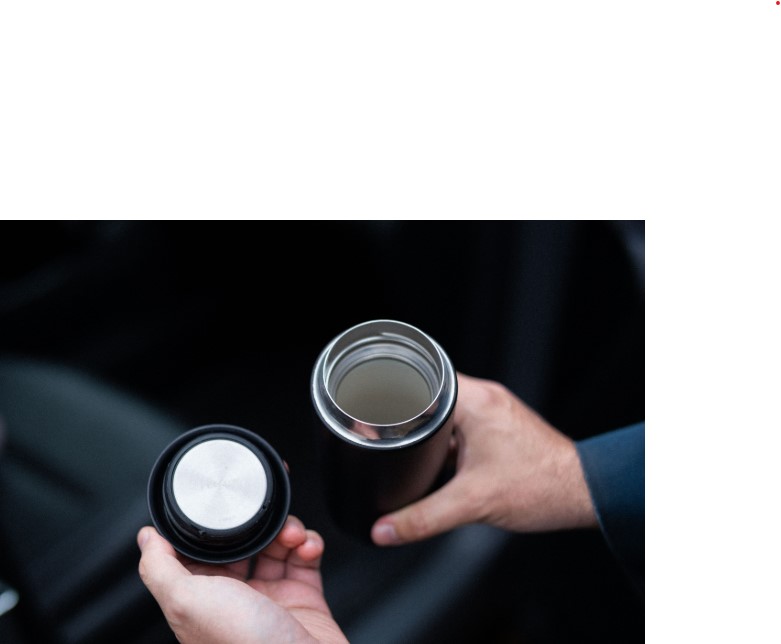
- Glass interiors are neutral to taste and won’t pick up lingering flavors. They resist staining and don’t react with drinks, which is great for people who care about flavor.
- Metal bits add strength where needed. When designers do it right, those parts don’t create shortcuts for heat to escape. They reinforce the mug without turning it into a heat conduit.
- Silicone gaskets and seals stop leaks and keep internal airflow under control. A good seal makes a huge difference when you’re driving through turns.
- Polymer sleeves and handles make the cup easier to hold and less likely to slip. They protect your hand from a hot exterior and add a bit of impact protection if the cup takes a knock.
Used together thoughtfully, those materials form a system that balances durability, thermal performance, and comfort.
Safety and care — without the technical terms
Materials chosen for drinkware are generally safe when they’re meant for food contact. Glass won’t leach taste, and modern sealing materials are designed to hold up to repeated use. Still, how you care for a cup affects how it performs.
- Clean lids and seals regularly so residue doesn’t prevent a tight fit.
- Check flexible parts now and then for wear; replacing a tired gasket is cheap and keeps leaks away.
- Avoid subjecting glass to sudden temperature shocks — that’s the easiest way to create cracks or stress.
A little attention goes a long way toward keeping a cup both safe and useful for a long time.
Design details that matter in the car
Small features make a big difference when a mug is used in a moving car.
- Lid shape: a lid that limits internal airflow but still lets you sip safely will slow cooling without being awkward to use.
- Multiple seals: more than one sealing point reduces spill risk during sudden stops.
- Stable base: a good fit with common cupholders cuts down on tipping and the habit of grasping the mug while driving.
- Inner surface treatment: reflective finishes can reduce heat loss without changing how the mug looks or feels.
These are the kind of pragmatic choices product teams think about when they test cups for driving conditions.
Key Points at a Glance
| Concern | Why it matters | Practical design choice |
|---|---|---|
| Conduction | Direct solid-to-solid heat paths change drink temp quickly | Add thermal breaks or insulating layers between inner and outer parts |
| Convection | Air movement inside or outside speeds heat exchange | Tight lids, controlled sip ports, smaller internal air volume |
| Radiation | Heat emitted as waves can be lost to surroundings | Use reflective inner surfaces to redirect heat inward |
| Flavor retention | Some materials pick up odors or flavors | Prefer neutral inner surfaces like glass |
| Leak prevention | Spills are a safety and cleanliness issue | Robust silicone seals and multiple gasket points |
| Handling | Comfort and safety while driving | External sleeves, ergonomic lids, and stable bases |
Small habits, big effects
How you use a mug affects its real-world performance more than you might think.
- Keep the lid on during the drive to slow cooling.
- Avoid direct sun on the cup if you want a hot drink to stay warm.
- Clean threaded areas and seals frequently so parts seat properly and don’t let air sneak in.
Those tiny choices can improve the everyday experience immediately — no redesign needed.
Practical guidance for makers and users
If you’re on a team making travel mugs, test prototypes under realistic in-car conditions: sunlight, vents, cupholder fits, and a bit of rough handling. If you’re a user, pick a design that’s easy to clean, has a reliable seal, and fits your car’s cupholder.
- Test prototypes in real cars to find hidden issues.
- Make lids easy to operate one-handed.
- Make seals removable for cleaning without tools.
When design and everyday use align, a Car Mug becomes less of a compromise and more of a small convenience that actually works.
Final Takeaways
A well-made Car Mug isn’t magic — it’s the result of managing heat paths, combining materials thoughtfully, and encouraging simple habits that preserve temperature and prevent spills. With realistic testing and attention to everyday use, a travel cup can be a small but meaningful upgrade to the daily commute. If you’d like to explore sample runs or arrange hands-on trials, you can contact a specialist such as automugfactory for guidance and demonstrations.
 Previous