 search
 English
 English
 Español
 русский
Industrial News
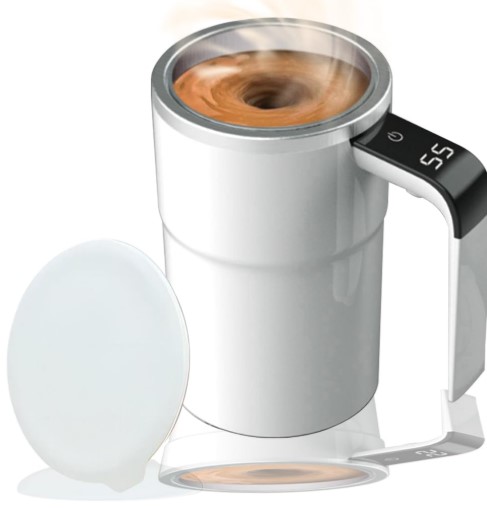
In recent months a simple-looking innovation has begun to attract attention for how it reshapes an everyday routine: the self-stirring travel cup commonly called an Auto Mug. At a glance it resembles an ordinary insulated cup, but inside a hidden stirring mechanism quietly blends powders, syrups, or cream with the press of a button. Reporters and consumers alike have been watching how this small automation moves from novelty into routine use, and what it might mean for convenience, accessibility, and workplace culture.
A subtle shift in daily habits
The appeal of the Auto Mug lies in a swift usability gain: a single, unobtrusive action replaces the time and motion of manual stirring. For commuters juggling a bag and a hot drink, for office workers who want to keep a desk tidy, and for anyone who prefers fewer utensils to wash, the concept answers a familiar friction point. Early adopters describe it as a gadget that simply fits into existing routines without asking for a new skill set.
- Convenience without ceremony — push a button, let the device blend the contents, and go.
- Reduced utensil use — fewer spoons or stirrers are needed, and the vessel itself becomes the tool.
- Cleaner results — hidden stirring minimizes splashes and keeps workspaces neater.
Who stands to gain?
Coverage of assistive technologies often highlights how small design changes can widen access. Physical limitations such as reduced hand strength or tremors make repetitive wrist motion difficult; a product that stirs at the push of a button becomes more than a convenience, it can be an enabler. Care providers, occupational therapists, and users with limited dexterity have expressed interest in solutions that reduce effort without changing the character of a familiar activity like preparing a hot beverage.
- Older adults and people with reduced grip strength find it easier to produce a well-mixed drink.
- Busy parents and professionals value speed and less cleanup during peak hours.
- Travelers appreciate a compact way to prepare a single drink while on the move.
Design considerations and everyday care
Designers of self-stirring vessels emphasize safe, straightforward use over flashy features. The aim is a stable cup that safely contains heat, prevents leaks during stirring, and keeps the stirring mechanism accessible for cleaning without exposing sensitive parts to water. Manufacturers and product-care guides generally recommend a few common-sense habits to preserve function: keep the mechanical base dry, clear residue from the stirring area promptly, and avoid immersing components that house the motor. These steps help extend product life and keep the stirring action smooth.
- Cleaning routine — wipe and rinse where allowed; keep motor housing dry.
- Handling — avoid dropping or subjecting the device to sudden shocks.
- Storage — allow the inner stirring area to air dry before sealing.
Consumer response and workplace uptake
In workplace settings, where coffee and tea rituals are woven into office culture, small devices that speed preparation may alter shared spaces. Some office managers report fewer communal spoons and a tidier kitchenette, while employees note faster turnaround for hot beverages during short breaks. Cafes and hospitality venues are observing customer curiosity about automated convenience and are examining whether such devices affect expectations for on-the-go service.
- Office kitchens — a reduction in single-use stirrers and less clutter around sinks.
- Cafes — a point of conversation for patrons interested in quick, self-prepared mixes.
- Commuter hubs — potential for single-cup solutions that reduce the need for extra utensils.
Quick comparison of user needs and Auto Mug features
| User need / context | How self-stirring cups respond | Typical user benefit |
|---|---|---|
| Limited hand mobility | Stirring action requires minimal force | Easier drink preparation |
| Short breaks at work | Fast mixing without utensils | Time saved, cleaner workspace |
| Travel and commuting | Integrated mixing inside the vessel | Less clutter, single-device prep |
| Desire for neat preparation | Reduced splashing during mixing | Fewer spills and stains |
| Environmental concerns | Potential reduction of disposable stirrers | Less single-use waste |
Safety and public-health perspective
As with any product that interacts with food or heat, safety guidance is central. Advisories emphasize avoiding immersion of motorized sections and following suggested cleaning steps to prevent residue buildup. Public-health specialists point out that devices which limit cross-contamination—because people are less likely to share spoons—can have a modest, positive impact on communal hygiene practices in shared kitchens or break areas.
- Avoid shared utensils — internal stirring can reduce cross-use.
- Maintain hygiene — regular cleaning of the stirring area limits residue.
- Follow manufacturer care notes — especially for motor-protected sections.
Economic and social footprint
From a market perspective, the emergence of automated drinkware reflects a broader interest in appliances that solve precise, time-bound needs without complex setup. Small consumer electronics that focus on one task—streamlining it and making it accessible—fit into a trend of micro-automation. Socially, products that reduce friction in familiar rituals can shift expectations about speed and cleanliness in both private and shared spaces.
- Micro-automation trend — single-purpose devices that ease specific tasks.
- Cultural shift — growing expectation for low-effort conveniences in everyday life.
- Environmental dimension — opportunities to reduce disposable items through integrated design.
Expert voices and future directions
Design and accessibility experts caution that technology alone does not guarantee improved outcomes: attention to user testing, durable materials, and clear care instructions is essential. Looking ahead, the conversation is likely to center on how to balance convenience with longevity and how to design products that integrate smoothly into diverse daily contexts. Some product designers are exploring modular systems that make the stirring element simpler to maintain, and care guides that prioritize long-term function over disposable convenience.
- Emphasis on testing — real-world trials with diverse users to refine ergonomics.
- Material choices — selecting finishes that resist wear and ease cleaning.
- Maintenance-friendly design — simpler access to parts that need care.
Small change, visible effects
An Auto Mug-style cup represents a modest technological nudge with a visible effect on routine behavior: it reduces the effort of a common task and likely reshapes the expectations people bring to quick drink preparation. Whether it becomes a familiar desk companion or remains a niche convenience will depend on how well designers and users align on practical needs, care practices, and everyday value. For newsrooms tracking small-scale innovations that ripple into daily life, the Auto Mug is worth watching as an example of how subtle automation can change ordinary habits. For more information and resources related to self-stirring drinkware, visit Yongkang Xiaoyu Industry & Trade Co., Ltd..
 Previous