 search
 English
 English
 Español
 русский
Industrial News
Home / News / Industrial News / How Does a Stainless Drink Bottle Factory Work From Material to Finished Product
A Stainless Drink Bottle Factory is usually not organized as a single linear process. Work tends to move across different areas at the same time, depending on bottle structure and order requirements. One batch of material may be in shaping while another is already moving into surface treatment or assembly.
In practice, the workflow is adjusted slightly from case to case. Bottle shape, intended use, and even finishing preference can shift how early steps are handled. Because of that, the process feels more like coordinated movement between sections rather than a fixed sequence.
Material selection plays a quiet but constant role in how production develops inside a Stainless Drink Bottle Factory. Stainless steel is the base in most cases, but it is not always identical across all parts of the bottle.
Some sections may prioritize forming stability, while others are chosen for surface behavior or contact safety. These differences are not always visible once the product is finished, but they become more noticeable during shaping and welding.
In actual production settings, material behavior often affects how smooth the process feels on the line. Some sheets respond more predictably during pressing, while others require slower adjustment.
| Focus area | Practical effect in production |
|---|---|
| Material response | Influences forming consistency |
| Surface behavior | Affects cleaning and finishing steps |
| Structural stability | Impacts shape retention during use |
| Processing adaptability | Changes production flow smoothness |
Material choice is usually settled early, but its impact continues through almost every stage inside the factory environment.
The transformation from flat steel sheets into a finished bottle happens in stages that often overlap rather than follow a strict order.
At the beginning, sheets are pressed into a rough bottle shape. It is not detailed at this point, more like setting the base structure. After that, edges and joints are adjusted, and some parts may be reworked depending on alignment.
Welding is introduced once the structure becomes stable enough to hold its form. However, in some Stainless Drink Bottle Factory setups, certain joints may be pre-treated earlier depending on production habits.
Finishing adjustments come later, where uneven areas are corrected and the overall shape is refined. The process is less about a single transformation and more about gradual alignment toward a usable form.
Vacuum insulation is formed after the main body structure is already in place. Two layers of stainless steel are arranged with a sealed gap between them, and air is gradually removed from that space.
The stability of this sealed area depends heavily on how consistent the sealing process is. If one section is slightly uneven, the internal condition may not remain stable during use.
Inside a Stainless Drink Bottle Factory, attention is usually placed on a few practical points during this stage:
Different production lines may handle this step differently. Some rely more on equipment control, while others include additional manual checking before moving forward.
Once sealed, the structure is generally not modified again, so this stage tends to receive repeated checks before moving on.
Inner surface treatment happens after the main shaping work is completed. It is not always visually noticeable, but it affects how the bottle behaves during repeated use.
If the inner surface is slightly uneven, liquid residue can stay behind more easily, which makes cleaning less straightforward. For this reason, Stainless Drink Bottle Factory setups usually allocate a separate area for internal finishing work.
Some lines use mechanical polishing, while others apply more detailed smoothing methods. The difference is not always visible at first glance, but it becomes clearer over time during regular washing.
Occasionally, a quick inspection follows this step, mainly to confirm whether any area needs another pass before continuing to assembly.
Powder coating is usually added after the bottle body has already been formed. By that point, the shape is set, so the focus shifts to the surface. What happens here matters more than it may look at first. A coating that sits unevenly can change how the bottle feels in daily use, especially after repeated handling and cleaning.
Before the coating goes on, the surface needs to be cleared of dust, oil, and anything else that could interfere with adhesion. If that part is rushed, the finish may look fine at first but behave differently later. Some factory lines take a more careful route here, especially when the surface has a textured or colored finish.
Once the powder is applied, the bottle moves into curing. That is the stage where the coating settles and becomes part of the outer layer. The result depends on more than just the coating itself. Handling between stations, surface preparation, and the consistency of the curing step all leave their mark.
A few things usually matter most:
Bottle caps are not a small detail. In many cases, they shape the whole drinking experience. A cap that opens too loosely or seals too tightly can change how the bottle feels in use, so the design has to match the way people actually carry and open it.
Some caps are made for quick access. Others are shaped more around leak resistance. There is no single layout that works for every use case, which is why cap design usually shifts with the intended audience. A bottle meant for commuting may need one type of opening behavior, while one used for outdoor activity may need something else.
Inside production, the cap often goes through several rounds of adjustment. Hinge movement, sealing contact, and opening resistance are all small details, but they add up. The design is usually shaped by trial, not just by drawings. In that sense, the cap is often refined alongside the body, not after everything else is finished.
Quality checks do not usually happen only at the end. In a Stainless Drink Bottle Factory, inspection often shows up at different points in the process, because problems can appear early or late. A bottle may look fine on the outside and still have a weak point in the seal, so the checks need to look past appearance.
Some inspections are straightforward. Workers check shape, fit, finish, and whether the parts sit together the way they should. Other checks are more practical and focus on how the bottle behaves when closed, moved, or turned upside down. The idea is to catch anything that feels off before the product leaves the line.
| Inspection stage | What is usually checked |
|---|---|
| Early check | Shape, alignment, visible defects |
| Mid-stage check | Joint fit, seal behavior, part movement |
| Final check | Leakage, surface condition, closure fit |
| Packing check | Assembly completeness, consistency |
The order may shift a little from one factory to another, but the logic stays similar. The bottle needs to look right, fit right, and hold up under regular use.
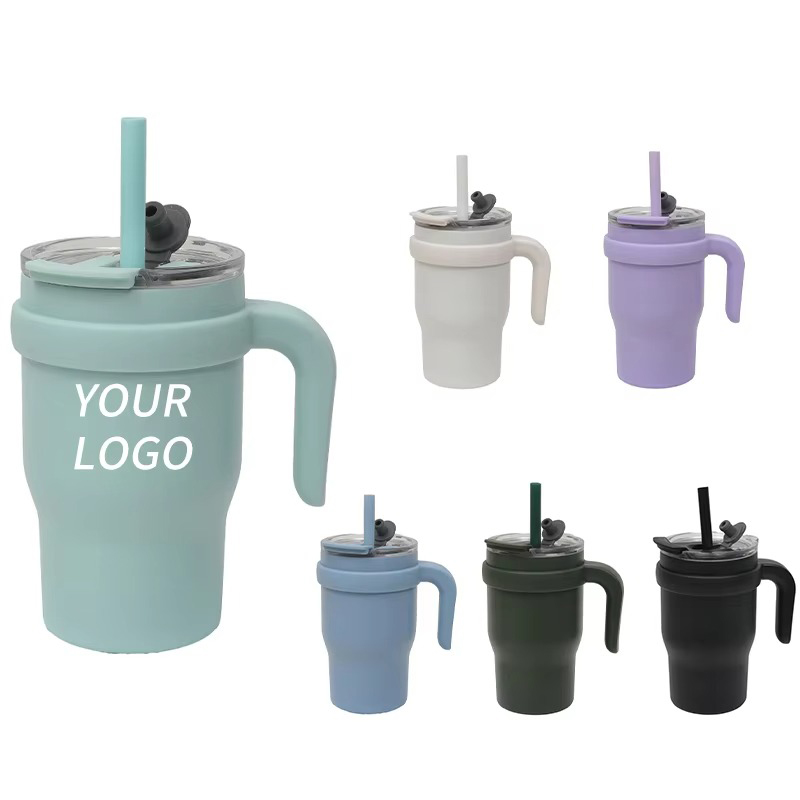
Customization usually starts with one simple question: what does the customer want the bottle to do, and how should it feel in hand? From there, the factory adjusts the parts that matter most, such as shape, finish, cap type, and packaging.
Some projects stay close to an existing structure and only change a few features. Others need more adjustments across several stages. Either way, the production line has to stay practical. A design that looks fine on paper may still need changes before it can move smoothly through manufacturing.
The usual flow is not really separate from the rest of production. It connects to every stage. If the body shape changes, the cap may need to change too. If the finish changes, the coating step may also shift. That is why these projects are usually discussed early, before everything becomes fixed.
| Area of adjustment | Common focus |
|---|---|
| Bottle body | Shape, thickness, size feel |
| Surface finish | Texture, color tone, coating style |
| Cap system | Opening style, seal behavior |
| Packaging | Layout, material, presentation |
That kind of coordination keeps the production process from becoming fragmented, which is usually where delays start to appear.

Yongkang Xiaoyu Industry & Trade Co., Ltd. is a professional manufacturer of travel mugs, plastic cups and insulated cups. It is mainly engaged in the design, manufacture and sales of plastic cups and thermos cups.
 Previous