 search
 English
 English
 Español
 русский
Industrial News
Large capacity drinkware often looks straightforward from the outside, but the actual product behavior comes from a chain of design and manufacturing decisions. Heat retention, sealing, surface feel, and daily usability are all shaped long before the tumbler is used.
For a 40oz Stainless Steel Tumbler Supplier, the challenge is not only producing a container, but keeping several performance expectations aligned in one structure. Some of these expectations are functional, others are related to handling comfort or appearance over time. They interact more than they appear to at first glance.
What affects insulation performance differences in large capacity stainless steel tumblers
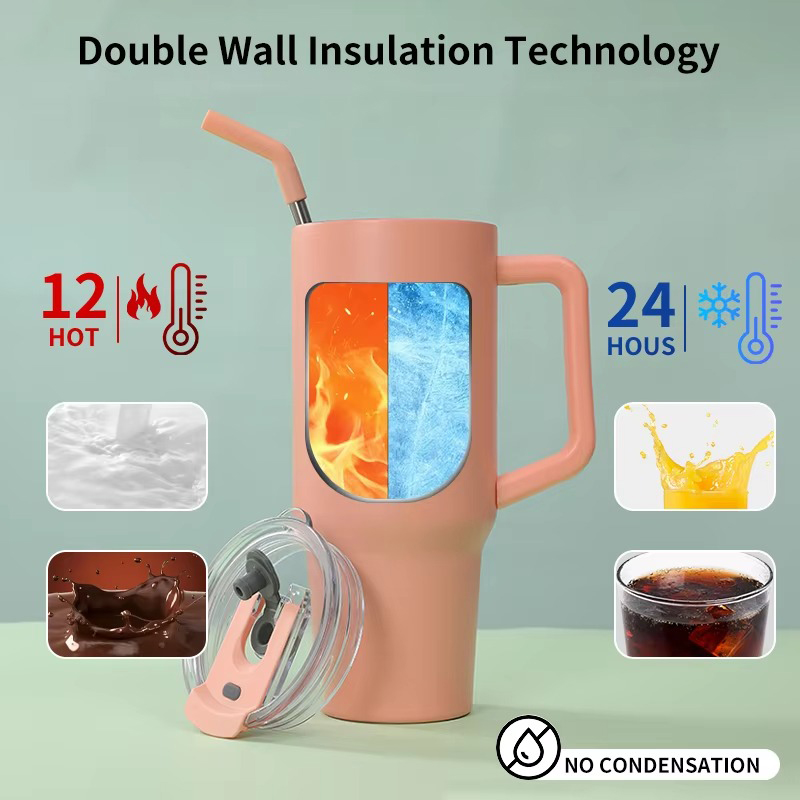
Thermal behavior in large tumblers usually comes from a combination of structure stability and how well the internal space is formed. Even when the design looks identical, small differences in processing can lead to noticeable variation in how temperature holds during use.
The lid plays a more active role than it seems. Once the cup is opened or slightly loosened, heat exchange increases. The body structure also contributes, especially how evenly the wall is formed and whether the internal vacuum layer remains stable.
A 40oz Stainless Steel Tumbler Supplier typically has to keep these elements aligned, because insulation performance rarely depends on one isolated factor.
| Factor area | Practical influence during use |
|---|---|
| Internal sealing consistency | Stability of temperature over time |
| Lid fit and closure tightness | Heat exchange during opening and movement |
| Wall structure uniformity | Speed of temperature change |
| Overall assembly alignment | General consistency between units |
How lid structure design changes daily drinking experience in 40oz tumblers
The lid is usually the part that defines how the product feels in everyday use. Small changes in structure can shift drinking rhythm, cleaning effort, and even how people carry the tumbler during the day.
A simpler opening style tends to support quick access, while more controlled designs can slow down flow for sipping comfort. Straw-based structures create a different experience again, especially in situations where repeated small intake is preferred.
Cleaning behavior is tied to structure. Some lids are easier to rinse because they have fewer internal corners, while others require more attention after regular use. This is often a trade-off between convenience and control.
From a production perspective, a 40oz Stainless Steel Tumbler Supplier has to treat lid design as part of the overall usage cycle rather than just a closing component.
Which manufacturing details determine leakage resistance during production and use
Leakage issues are rarely caused by a single obvious flaw. More often, they come from small mismatches in how parts meet and hold together under movement.
The sealing ring is one of the most sensitive elements. If it is slightly uneven or shifts during assembly, the closing pressure can change. Thread alignment also matters, especially when repeated opening and closing gradually affects fit consistency.
Another factor is how the lid sits against the cup body. Even minor misalignment can become noticeable when the cup is tilted or carried in motion.
Key points often linked to sealing stability include:
- Positioning of the sealing ring during assembly
- Consistency of closure alignment
- Thread engagement smoothness
- Contact balance between lid and body
A 40oz Stainless Steel Tumbler Supplier usually evaluates these together, since leakage behavior tends to come from the combined effect rather than a single point.
How surface coating choices influence durability and visual finish over time
Surface treatment affects both how the tumbler looks and how it behaves during daily handling. It is not only about color, but also about how the surface reacts to repeated contact and cleaning.
Some finishes feel smoother and more uniform, while others provide more grip during use. Over time, contact with surfaces such as tables, bags, or cup holders gradually changes the outer layer depending on its structure.
Cleaning habits also play a role. Frequent washing and temperature changes can slowly alter appearance, although the rate depends on coating type and application method.
| Surface aspect | Real-world effect |
|---|---|
| Texture type | Grip comfort during handling |
| Coating structure | Resistance to visible wear |
| Cleaning exposure | Change in surface appearance over time |
| Environmental contact | Gradual surface marking |
For a 40oz Stainless Steel Tumbler Supplier, coating selection is usually tied to how the product is expected to be used rather than only visual preference.
What testing steps are typically used before bulk shipment of stainless steel tumblers
Before products leave the production stage in larger quantities, they usually go through a set of checks that are closer to real usage than lab-style evaluation. The idea is not only to confirm structure, but to see how the product behaves after being handled, opened, closed, and moved around multiple times.
Sealing behavior tends to be one of the first things reviewed. A lid that feels fine at first glance may behave differently after repeated use. That is why opening and closing cycles are often included in the inspection process. Temperature holding is sometimes observed as well, not in a complex way, but enough to notice whether there are unexpected shifts.
Small inconsistencies can appear in different areas, so checks are spread across multiple touchpoints rather than concentrated in one test.
How packaging design affects customer perception in online tumbler sales
Packaging has a stronger role than just protecting the product during shipping. In online orders especially, it becomes the first real interaction someone has with the item. The moment the box is opened often shapes the initial impression more than expected.
Inside the packaging, how the cup is positioned matters. If it moves too freely, it can feel less controlled even if the product itself is fine. On the other hand, a stable inner structure gives a sense of order when unpacking. Outer protection simply reduces risk during transport, but the internal layout is what people notice first.
Some small details that tend to influence perception include how neatly the components are arranged, how easy it is to remove them, and whether anything feels unnecessarily complicated during unpacking.
- Inner structure that keeps the product steady during movement
- Clear separation between components inside the box
- Packaging thickness that matches transport conditions
- Straightforward opening without forcing or damage risk
Why customization options play a role in brand development for tumbler products
Customization is less about decoration and more about how a product takes on a specific identity. A simple change in surface treatment or marking can shift how the same base product is perceived across different groups of users.
For larger tumblers, adjustments are often made in areas that are visible but not structural. That includes surface finish, logo placement, or subtle color differences. These changes help the same product line fit into different usage contexts without altering its core function.
From a production standpoint, customization requires alignment between design intention and manufacturing consistency. Even small variations need to remain stable when repeated across larger batches, which makes coordination more important than complexity.
Where cost differences usually come from in stainless steel tumbler manufacturing
Cost variation rarely comes from a single obvious factor. It builds up through several steps in the production chain, and each stage adds its own level of complexity or material requirement.
Material selection is one layer, but not the only one. The way the body is formed, how stable the structure needs to be, and how many finishing steps are involved all contribute in different ways. Surface treatment can also shift processing time depending on how detailed or layered it is.
Sometimes the difference is not in the product itself but in how many controlled steps are needed to keep consistency across production.
| Cost-related area | Practical influence in production flow |
|---|---|
| Material choice | Changes in input consistency and handling |
| Forming process | Level of shaping and structural control needed |
| Surface treatment | Time and steps required for finishing |
| Assembly process | Alignment effort between components |
These factors tend to overlap, and cost differences usually come from how they combine rather than one isolated decision.
At the final stage of production and coordination, attention is often placed on keeping these small but connected details aligned. In real manufacturing workflows related to 40oz Stainless Steel Tumbler Supplier projects, such coordination can be seen in operations associated with Yongkang Xiaoyu Industry & Trade Co., Ltd.
 Previous