 search
 English
 English
 Español
 русский
Industrial News
Home / News / Industrial News / What Does an Auto Mug Supplier Really Do Behind the Supply Chain Process
Behind an Auto Mug Supplier is usually a chain of connected work rather than a single linear task. Requests move through planning, material preparation, production handling, and output coordination in a way that depends on timing and internal alignment.
What matters is not only how each stage performs on its own, but how smoothly information shifts from one stage to another. If one part slows down or becomes unclear, the rest of the process often adjusts around it. Because of that, many operations tend to focus on keeping movement steady between steps instead of treating them as isolated tasks.
Production and inventory usually sit on the same operational track rather than two separate systems. In practice, materials are not simply stored and used when needed. They are positioned and released in a way that matches production rhythm.
The flow tends to depend on a few practical conditions:
Instead of reacting to each order independently, the system often works in grouped cycles. That reduces constant switching between tasks and helps maintain a more stable rhythm across production and storage areas.
In an Auto Mug Supplier environment, this kind of flow design is less about complexity and more about reducing friction between steps that depend on each other.
Order processing is usually the point where abstract requirements turn into structured work instructions. At this stage, details are interpreted and translated into a form that production teams can actually follow.
The workflow does not always feel strictly linear. In many cases, steps overlap slightly depending on workload and material readiness.
| Stage | What actually happens | Output form |
|---|---|---|
| Intake | Requirements are collected and checked for clarity | Structured request |
| Planning | Work is arranged based on capacity and timing | Task direction |
| Production | Physical forming and finishing steps are carried out | Product units |
| Output handling | Items are prepared for next movement stage | Ready packages |
Between these stages, communication plays a quiet but important role. If one instruction is unclear, it can ripple into later steps. Because of that, the transition between order and production is often treated as a controlled handover rather than a simple pass-through.
Within an Auto Mug Supplier setup, this handover stage is where most coordination effort tends to concentrate.
The path from design to finished item is usually a chain of transformations. Each stage reshapes the previous input in some way, even if the change is not immediately visible.
Rather than treating it as a single production line, it helps to think of it as layered processing:
What often matters most is the early interpretation stage. If the initial translation of design intent is slightly off, later steps tend to inherit that deviation. It does not always show immediately, but it can appear in alignment, texture uniformity, or finish consistency.
In an Auto Mug Supplier workflow, these steps are usually arranged to reduce unnecessary correction loops later in the process.
Material choice and processing method tend to work together rather than separately. The same design can behave differently depending on how material properties interact with shaping and finishing methods.
Common material groups include:
Craft processes also influence final behavior in subtle ways. These often include:
One way to view this interaction is that materials set the baseline, while processes refine how that baseline behaves in real use.
| Material type | Processing sensitivity | Typical effect on final result |
|---|---|---|
| Ceramic based | Moderate to high | Stable surface detail and finish response |
| Metal based | Moderate | Strong structural consistency |
| Polymer based | High | Flexible shaping and lighter handling feel |
In an Auto Mug Supplier system, material and process selection are usually decided together, since separating them can lead to mismatched expectations in output behavior.
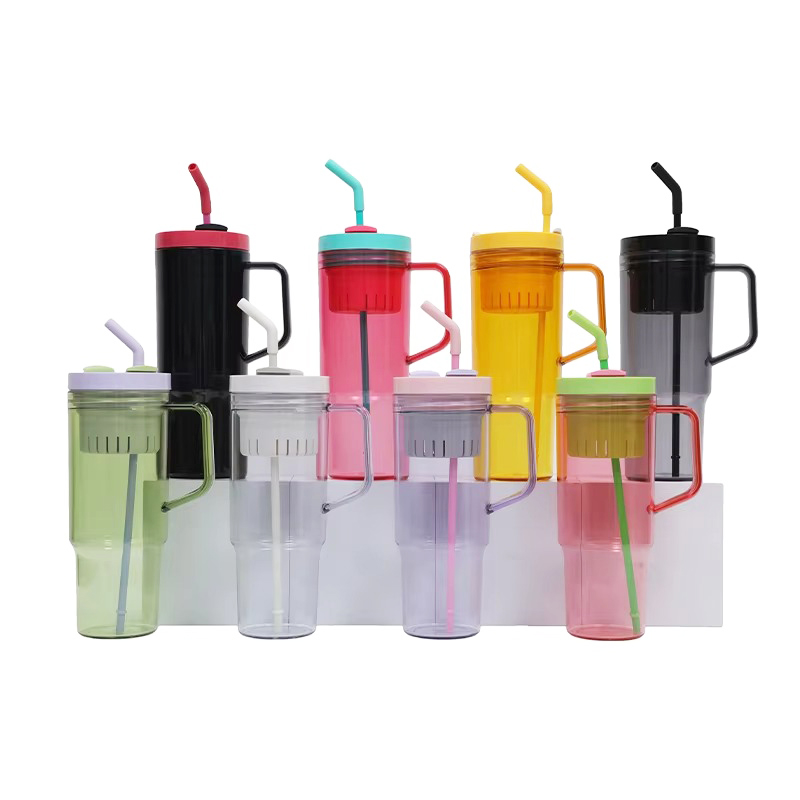
The connection between production and online sales is often less visible than the manufacturing side, but it shapes how smoothly products move after orders are placed. A supply system that works well with online stores usually needs clear signals on what is running low, what is already reserved, and what still needs to be prepared.
In practice, the link is often built around shared information rather than constant manual checking. Order changes, stock movement, and restocking requests are easier to manage when they are passed through a structured channel instead of handled one by one.
A few practical points usually matter here:
When these parts stay aligned, the result is less confusion between what has been sold and what can still be shipped. For an Auto Mug Supplier, this kind of connection often matters because the supply side and the sales side move at different speeds.
| Connection point | What it helps with | Practical effect |
|---|---|---|
| Order updates | Keeps sales records current | Fewer mismatches |
| Stock signals | Shows what needs attention | Better restock timing |
| Production notice | Starts manufacturing planning | Shorter delay between demand and action |
| Output readiness | Confirms items are ready to move | Smoother dispatch flow |
The stronger the link between these parts, the easier it is to reduce interruptions when new orders arrive.
Supply planning is often where expectations meet practical limits. Some brands prefer a model that gives them a clearer view of when items can be produced, how changes are handled, and what level of coordination is needed before shipment.
This approach is often attractive because it reduces the need to guess how production and stock will respond later. Instead of treating supply as an afterthought, it becomes part of the planning stage from the start.
There are several reasons this model continues to draw attention:
For many buyers, the main appeal is not scale alone. It is the ability to plan around known steps instead of reacting too late. That matters when product movement depends on timing, material readiness, and output coordination.
An Auto Mug Supplier model also tends to fit buyers who want fewer surprises in the supply cycle. The process is still dependent on communication, but the overall structure is often easier to follow than a loose arrangement with no fixed workflow.
Custom work usually adds another layer of decision making. Even when the base product is familiar, the details can change how the item looks, feels, and moves through production.
Before choosing custom options, it helps to look at the request in a practical order rather than a visual one. Design, material, surface handling, and packing all affect whether the final result matches what was originally intended.
Common areas to review include:
Not every custom idea behaves the same way in production. Some changes are simple to apply, while others require more coordination because they affect multiple stages at once. A mark placement, for example, may seem small, but it can influence how the design is applied, how it is inspected, and how it appears after finishing.
It also helps to keep the request clear. Vague direction can slow down production and create extra review steps later. In a working Auto Mug Supplier environment, clarity usually saves more time than trying to fix a loose specification after production has started.
Quality control is often treated as a final check, but in daily production it usually works more like a repeated filter across several stages. Instead of waiting until the end, many checks happen while the item is still moving through the line.
The purpose is not only to catch visible problems. It is also to keep the product moving in a stable pattern so the same issues do not appear again in later batches.
| Check stage | Focus | Result |
|---|---|---|
| Material review | Verifies incoming condition | Acceptable input for use |
| In process check | Watches shape and finish | Early correction if needed |
| Visual review | Looks at appearance and alignment | Keeps output consistent |
| Packing review | Confirms readiness for dispatch | Final movement approval |
Some of the most useful checks are simple. Surface appearance, fit, finish, and handling condition can tell a lot about whether the process stayed within its intended range. If something looks unusual early, it is usually easier to handle before it becomes part of the final output.
Quality control also depends on repetition. A single review is not enough on its own. What gives the system value is that it keeps following the same sequence, so changes do not go unnoticed from one step to the next.
That kind of practical alignment is often what buyers are looking for when they compare suppliers such as Yongkang Xiaoyu Industry & Trade Co., Ltd.

Yongkang Xiaoyu Industry & Trade Co., Ltd. is a professional manufacturer of travel mugs, plastic cups and insulated cups. It is mainly engaged in the design, manufacture and sales of plastic cups and thermos cups.
 Previous