 search
 English
 English
 Español
 русский
Industrial News
Home / News / Industrial News / How Does a 40oz Water Bottle Supplier Ensure Quality and Consistency in Production
Large capacity drinkware production often looks simple from the outside, but in practice it sits across several small but connected decisions. Material behavior, forming stability, sealing structure, and thermal performance all influence how the product behaves once it is used repeatedly in daily environments.
A 40oz Water Bottle Supplier usually works across these stages in sequence, although in real production they often overlap. One adjustment in material selection can affect shaping stability, and that later influences how the bottle handles temperature retention. The process is less linear than it appears on paper.
What follows is a closer look at how each stage connects without treating them as isolated steps.
Material choice is rarely decided in isolation. It tends to follow the intended usage pattern first, then moves into compatibility checks with structure and sealing parts.
For metal-based bottles, internal surfaces are selected for stability when in contact with liquids that shift temperature. The focus is not only resistance but also how the surface behaves after repeated filling cycles. External layers, on the other hand, are often adjusted based on grip feel and how the bottle is handled throughout the day.
Plastic components are usually reserved for closure systems. This is where flexibility matters more than rigidity, especially when the lid is opened frequently or carried in motion.
There is also a practical consideration that often appears during production planning: different environments tend to shift priorities rather than define fixed material rules.
| Component | Material Direction | Functional Role in Use |
|---|---|---|
| Inner structure | Metal based material | Holds liquid and supports temperature behavior |
| Outer layer | Coated surface finish | Touch feel and surface protection |
| Lid system | Flexible polymer parts | Sealing control and drinking access |
Material decisions at this point usually influence later production steps more than expected, especially when forming and sealing come into play.
Capacity in large bottles is not treated as a single fixed point during production. It behaves more like a controlled range shaped by forming stability and internal geometry consistency.
When a bottle body is shaped, small differences can appear due to cooling behavior and wall thickness distribution. These differences are expected rather than treated as faults, as long as they remain within controlled limits.
A more practical way suppliers handle this is through repeated checks at different stages rather than one final measurement.
There are a few areas that typically receive attention:
In real factory conditions, capacity control is often tied to how stable the forming process is rather than adjusting the final product individually. Once the system stabilizes, capacity tends to follow the same behavior pattern across batches.
The double wall structure is not only about insulation. It also defines how the bottle holds its shape under repeated use conditions.
During assembly, the inner and outer layers are aligned before the space between them is processed. That space is then sealed in a way that limits air presence, which reduces heat transfer pathways. The result is a structure that behaves differently from a single layer container, especially during temperature change cycles.
What often gets overlooked is how sensitive this structure is to alignment. If the spacing between layers shifts even slightly during sealing, later performance may not remain stable across identical units.
A few practical points usually appear in production discussions:
The structure also changes handling feel. The bottle tends to have a more balanced weight distribution, which becomes noticeable during everyday carrying rather than during testing.
Thermal testing is not limited to controlled setups. In practice, observation often includes repeated usage patterns that reflect daily behavior more closely.
Instead of looking at a single condition, evaluation usually follows how the bottle responds when it is opened multiple times or exposed to changing environments throughout the day. These small interactions gradually affect internal temperature behavior.
Some common observation patterns include:
These patterns matter because they reflect actual handling more than static measurement does. A bottle that behaves steadily under repeated interaction is usually more predictable in real scenarios.
A 40oz Water Bottle Supplier typically builds these observations into production feedback loops, so later batches can reflect stable behavior rather than isolated test results.
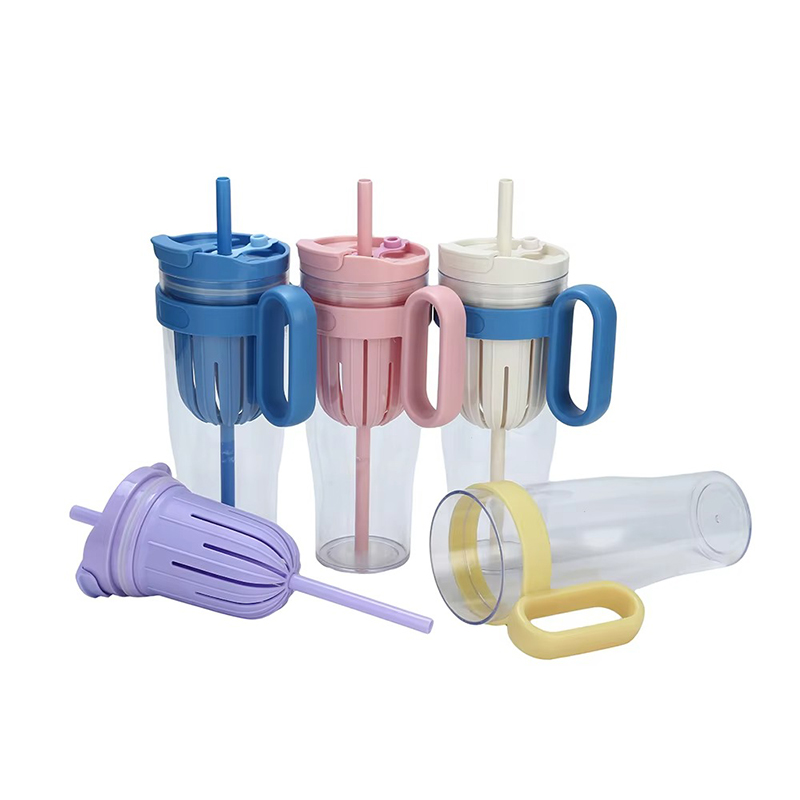
Lid design often starts from usage habits rather than engineering drawings. In practice, factories do not treat lids as a single category. They shift between structures depending on how the bottle is expected to behave in motion, on a desk, or inside a bag.
Screw lids are still widely used in transport related situations. The reason is simple, fewer moving parts usually means fewer unexpected issues during handling. Straw systems appear in another direction entirely, where drinking happens in shorter intervals. Flip lids sit somewhere in between, though their behavior depends a lot on hinge quality and sealing alignment.
There is also something that is not always written into product sheets. The same lid design can feel different after repeated use cycles, especially when sealing edges start interacting with pressure changes.
Not all combinations behave the same once production scales up, which is usually where small adjustments appear.
Branding on drinkware is not treated as a final decorative step in most production lines. It usually enters the workflow earlier than expected, sometimes right after surface treatment decisions are made.
Different coating finishes react differently to marking processes. A smooth surface can hold clearer visual contrast, while textured layers may soften the appearance slightly. Neither is strictly better, but they behave differently under repeated handling.
Printing is not the only concern. Heat exposure during processing, drying time, and even the sequence of coating and marking can change the final result more than expected.
| Method | Surface behavior | Practical observation |
|---|---|---|
| Print marking | Works on smoother coating | Visibility depends on wear over time |
| Engraving style | Stable on metal base | Appearance remains steady under friction |
| Transfer application | Flexible across shapes | May vary slightly with curvature |
Packaging sometimes gets overlooked, but it tends to carry the same visual direction as the bottle itself. In real production, it is often adjusted at the same time as surface decisions rather than separately.
Quality checks are rarely placed at only one stage. They are distributed across the process in a way that mirrors how the product is built.
Material checks usually happen early, but they are not only about surface condition. Thickness variation and consistency across batches are often checked quietly before forming begins.
During shaping, attention shifts. The focus is less about appearance and more about how the structure settles after cooling. This part is sometimes underestimated because results are not always visible immediately.
After assembly, the situation changes again. Sealing behavior becomes more noticeable, especially when lid and body interaction is tested under repeated use simulation.
A few control points tend to appear repeatedly:
These steps are not always treated as separate departments. In many cases, they overlap depending on production speed and order volume.
There is usually a point where small differences between batches are noticed. That is where adjustments tend to happen, not earlier.
Cost and consistency are usually discussed together in production meetings, but in practice they are not balanced through a single adjustment. They shift through many small decisions across the workflow.
Material choice is one area where trade-offs appear early. A more stable input can reduce later variation, but it may affect processing flexibility. On the other hand, easier-to-handle materials sometimes require tighter control later in the process.
Production steps also matter. A simplified flow may reduce handling time, but it can reduce adjustment points as well. More layered processes allow more control, but they also introduce more coordination work.
This is why balance is not fixed. It moves depending on order type, structure complexity, and expected usage behavior.
At this stage, coordination across suppliers becomes part of the production rhythm. In that context, references to Yongkang Xiaoyu Industry & Trade Co., Ltd. often appear within broader manufacturing discussions, especially where drinkware production workflows connect multiple stages of sourcing and assembly.

Yongkang Xiaoyu Industry & Trade Co., Ltd. is a professional manufacturer of travel mugs, plastic cups and insulated cups. It is mainly engaged in the design, manufacture and sales of plastic cups and thermos cups.
 Previous