 search
 English
 English
 Español
 русский
Industrial News
An auto electric mug plugged into a car's 12V outlet promises hot coffee on a commute, yet the actual heating performance varies considerably between models, and understanding why starts with looking past the marketing copy toward the electrical and thermal engineering underneath.
How The Heating Element Actually Works
Most units rely on a thin heating plate or coil embedded in the base, powered directly through the vehicle's cigarette lighter socket. An auto electric mug typically draws between 8 and 15 watts from a 12V source, which is modest compared to a household kettle, so the heating process works more by slowing heat loss and maintaining a set temperature than by rapidly boiling liquid from cold. This distinction matters for buyers expecting the same speed as a countertop appliance.
Temperature control circuits, when present, cycle the heating element on and off once the beverage reaches a target range, which prevents overheating and protects the mug's internal components from continuous full-power operation during a long drive.
Comparing Heating Performance Factors
|
Factor |
Impact On Heating |
What To Check |
|
Wattage draw |
Determines heating speed |
8–15W typical for 12V units |
|
Base contact area |
Affects heat transfer efficiency |
Full base plate contact with mug wall |
|
Insulation layer |
Reduces heat loss between cycles |
Double-wall or vacuum insulation |
|
Temperature sensor |
Prevents overheating and cycling loss |
Built-in thermostat or smart chip |
|
Cable and connector quality |
Affects power delivery stability |
Reinforced 12V plug and cord |
This comparison shows that an auto electric mug performs best in practice when several of these factors work together rather than relying on wattage alone, since a high-wattage unit paired with poor insulation still loses heat quickly once the vehicle is off or the outlet disconnects.
Insulation And Heat Retention Between Cycles
Double-wall stainless steel construction, combined with a vacuum gap, keeps heat from escaping through the mug's sides even when the heating element cycles off between bursts. A car-heated mug built this way holds a stable drinking temperature far longer than a single-wall design, which loses heat almost immediately once the active heating stops. This matters particularly on longer drives where the mug may sit unpowered during stops.
Lid design also contributes to retention, since a sealed or semi-sealed lid slows evaporative heat loss compared with an open-top mug, a detail that's easy to overlook when comparing products by wattage specifications alone.
Power Draw And Vehicle Compatibility
Plug an accessory into an older car's 12V outlet and the voltage rarely stays put, especially once a phone charger or dash cam is sharing the same circuit. This fluctuation is part of why two units with identical wattage ratings can behave so differently on the road. An auto electric mug built to tolerate these swings keeps its target temperature steady, while a cheaper unit tends to lose heat or cycle unpredictably the moment voltage dips below spec.
For buyers sourcing units meant for retail shelves or promotional giveaways, checking the printed voltage range against real automotive conditions is worth the extra step. Most vehicles run somewhere between 11 and 14.8V once the engine is going, and a mug that only performs well at the upper end of that range is likely to disappoint customers driving anything but a newer model.
There's also a safety angle that gets overlooked. A plug without proper fuse protection, drawing continuous current in a car with aging wiring, is a small risk that adds up over years of use. It's a detail worth asking suppliers about directly rather than assuming it's standard.
Material And Build Considerations For Longevity
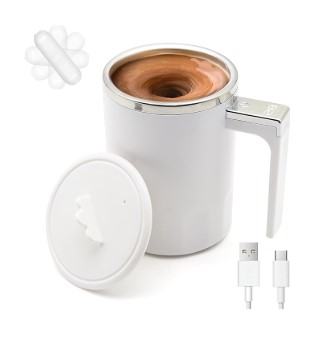
What a mug is made from shapes both how well it heats and how long it survives daily use. Stainless steel interiors hold up better than plastic linings when it comes to staining or trapping odors over time, something anyone who's owned a cheap travel mug has probably noticed firsthand. The outer shell carries its own demands too, since a car parked in direct sun can swing from freezing to scorching within a single day, and silicone-coated or powder-coated metal handles that stress far better than thinner alternatives.
An auto electric mug made with food-grade stainless steel and a coating built for heat cycling tends to outlast units where manufacturers cut corners on materials to shave production costs. It's a difference that often isn't obvious until months into ownership, which is exactly why it matters more for buyers planning repeat purchases than for a single impulse buy.
Buyers evaluating suppliers for bulk orders should request material certification, particularly for the interior liner, since beverage-contact surfaces are subject to food safety standards in most import markets.
Practical Takeaways For Buyers And Distributors
Heating efficiency in a car-heated mug comes down to a combination of wattage, insulation quality, and stable power delivery rather than any single specification. Distributors comparing suppliers should ask for actual temperature-hold data over a set time period rather than relying on wattage figures in isolation, since two products with identical power draw can perform very differently once insulation and build quality are factored in.
 Previous